Socrates said, “The misuse of language induces evil in the soul.” He wasn’t talking about grammar. To misuse language is to use it the way politicians and advertisers do, for profit, without taking responsibility for what the words mean. Language used as a means to get power or make money goes wrong: it lies. Language used as an end in itself, to sing a poem or tell a story, goes right, goes towards the truth.
A writer is a person who cares what words mean, what they say, how they say it. Writers know words are their way towards truth and freedom, and so they use them with care, with thought, with fear, with delight. By using words well they strengthen their souls. Story-tellers and poets spend their lives learning that skill and art of using words well. And their words make the souls of their readers stronger, brighter, deeper.

Ursula K. Le Guinm (via jonnoxvxrevanche)

luminousfinn:

You know what I wish?

I wish that people who write about Chirrut, Baze and Bodhi post-Scarif and focuses on them dealing with the loss of Jedha would do just the least bit of research into what it means to survive genocide. What it does to you as a person, What it does to a culture and a people to be subjected to that.

And what it’s like to live in diaspora, especially when your home, the place of your culture of origin has been wiped out. When you and the other few of your home planet that survives, what you carry with you, is all that is left. What you build is all that will ever remain.

On that note. 

Realize that these three would not be the only survivors of Jedha. That there would be others like Bodhi who had joined the Empire for one reason or another, but even if they didn’t before might turn against them now after Jedha was destroyed. 

People who over the years have found passage off planet, gone elsewhere in the galaxy in search of a better life.

Or fled. Jedha is a freaking warzone, we’re told as much in the movie. You know what warzones generates? Refugees. Jedha would have its share, scattered through the stars. It’s not even that unthinkable that some of the Guardians made it off planet after the fall of the temple.

Oh and finally.

These three are all from Jedha. Bodhi is a local lad, he’s not going to be ignorant of the culture and history. Stop freaking writing him like a child who would know nothing.

In fact, people who lived in occupied territories, who faces the worst of an imperialist boot heel, are often the ones who most aggressively keep their culture and stories alive among themselves, as a form of resistance against those who would steal their identity.

If the only way you you feel you can display their culture is through one of them teaching, or explaining it, then ffs please don’t have Chirrut or Baze explain it to Bodhi. Planets works like countries in Star Wars and you’re literally assuming that Bodhi is oblivious about the very country he grew up in.

I mean, it’s one thing if you explore local differences in their culture, heck Baze and Chirrut might not come from the exact same place on Jedha so they too might carry local differences with them. Or how Guardians might have done things in a different way that the rest of the populace. But that’s not what I’m talking about here, it’s writing Bodhi in a way where he need to be taught by Baze and/or Chirrut.

Have one of them explain it to Cassian or Jyn. Or even Luke. I don’t care, just stop that other thing.

Because, quite frankly, it’s painfully obvious that most of the people writing this are white Christians without even the first clue. In the beginning it was frustrating but also slightly amusing, in a “well, they’re trying and it’s not that bad so I’m just going to let it pass” kinda way. I know that no one is doing this out of malice, but now it’s quite honestly getting to the point where it’s just straight up frustrating.

PTSD: A Layman’s Guide

shadowcharmed:

Let’s talk a little about PTSD. Since this will be a theme on this blog, I want to dispel some misconceptions and myths. Hopefully this will help people understand such a complex disorder.

1) PTSD not what you think. It is not what the media thinks. You can have it and not know it.

2) Trauma is not what you think it is. Trauma is not what the media thinks it is. Trauma does not have to be a death; it does not have to be explosions; it does not have to be cancer; it does not have to be a near death experience, and it does not have to be witnessing a horrific thing such as gang rape. Trauma can be someone yelling at you; trauma can be someone ignoring you; trauma can be intense humiliation; trauma can be deep rejection, and trauma can be horrible betrayal. Trauma is that which wounds us so profoundly that we are permanently changed creatures.

3) There are two types of PTSD: Complex PTSD and PTSD. C-PTSD results from multiple traumas or multiple forms of abuse. PTSD is typically centered around just one event. C-PTSD is an accumulation.

4) You can get PTSD (or C-PTSD) from emotional abuse. This is possible. There are studies backing this up. Just because you weren’t “abused as badly” or “it was just words,” it doesn’t mean that you aren’t at risk or possibly suffer from PTSD. You can get it without being physically hurt.

5) Flashbacks don’t really work the way most people think they do. Every flashback is different. Sometimes you see things and sometimes you hear things. Sometimes a traumatic memory is played on a loop in your head, and the thoughts and feelings consume you for days. Sometimes you just feel like you’re emotionally re-experiencing the traumatic event. A lot of survivors of traumatic events don’t recognize those feelings as a flashback and therefore do not process upsetting events very well.

6) One of the most prominent symptoms of PTSD is avoidance. This can manifest as avoiding a single person or location. This can also be doing things like constantly distracting yourself so you don’t have to dwell on very upsetting memories or developing unhealthy habits such as constant drinking. This can lead to things like agoraphobia or other anxiety disorders.

7) PTSD develops because you experienced a very real threat to your safety and your brain wants to protect you from experiencing that again. It’s trying to remind you so you can avoid being in harm’s way again. This is your body’s attempt to save you. Don’t resent it too much. It’s trying to help.

8) People with PTSD startle easily and are hyper-vigilant in seemingly benign situations. This is because, as stated above, your brain is trying to protect you. Don’t get too upset or frustrated with yourself when you experience this. Respect your body. It wants to help.

9) Respect your trauma. Respect. Your. Trauma. So many people feel guilty bringing up something “benign” because “someone has it worse.” That is a normal reaction. People – and the media – tend to minimize things like emotional abuse or neglect. Those have scientifically been proven to be very traumatic. Respect your trauma. Just because someone has had a shittier situation, it doesn’t mean that yours isn’t shitty as well. Respect that. Know that your pain is real and your trauma is real. This is how healing from PTSD begins.

10) You don’t have to be a soldier to have PTSD.

If you constantly think about a traumatic encounter, constantly /avoid/ thinking about that encounter, have triggers such as seeing someone or going to a certain location, have anxiety or panic attacks when thinking about the event/person, feel unsafe all the time, or are easily startled, please see a mental health professional. You might have more than “just” anxiety. Your quality of life can be improved with treatment and medication. Respect your body. Respect your trauma. Respect your healing. Respect your worth.

freelancerkiwi:

thenearsightedmicroraptor:

obstinaterixatrix:

*everything* that’s considered romantic has been conditioned by society, it’s performative, like the emotion can be genuine but romantic *gestures* are a societal construct, chocolates, flowers, rings, there’s no inherent act of romance, the purest form of what is conceptualized as “romance” can probably be boiled down to emotion + intent, and the manifestation of that combo’s gonna be different for everyone

an action evoked from a feeling of adoration and the need to express it can be constrained by what society provides, but once it’s made irrelevant the meaning becomes tailored to those experiencing it; someone giving fancy chocolates to their s.o. because it’s ‘the thing to do’ can’t measure up to someone giving the chocolates because they know their s.o. thinks the boxes are nice and really likes hazelnut fillings, same gesture, but former lacks ‘inherent’ romance because romance isn’t ‘inherent’, the later has a standard approach but it goes beyond what’s considered ‘romantic’

Hello I am a big fan of Obstinaterixatrix’ Romance Meta and I’m just gonna add to this bc it’s a good post.

I feel like what makes the difference between something being romantic and something being What Society Says Is Romance is the connection between people.

Let’s say two people arrive on my doorstep. One of them has a bouquet of expensive roses from the florist. The other one has a dead bird in a plastic bag. We all know which one is to be considered the romantic gift (hint: it’s not the corpse)

And it’s not like I don’t like flowers or am allergic or anything, I would probably be flattered. But I have no connection to roses, and like, you can give roses to more or less anyone

Dead birds are not a standard gift, for pretty obvious reasons. A person bringing me a corpse in a plastic bag had to know me well enough to know that I collect bones and process them myself, and you don’t go shopping for birds in the Dead Bird Shop around the corner, so that means this person didn’t go out with the intent of getting me something and came back with an Appropriate Gift, they probably stumbled across something and thought about me (this ‘something’ just so happens to be a dead bird, because I’m weird) And then they had to go through the process of picking this bird up and bagging it and bringing it to me, probably pretty spontaneously and without a calendar event that says Find Dead Bird For Raptor with a timeslot between three and four pm.

You can’t have Corpse I Found In a Ditch be romantic without some sort of connection here. Roses can be romantic, but it can also just, be a formula. Two plos Two Equals Romance. A shortcut for ‘I care about you‘, even though the person might …. not, actually.

If it’s someone who loves fresh flowers in their home but rarely has the money to buy large arrangements, or like OP’s example where person A gets the chocolates because they know their s.o. thinks the boxes are super cute, then we have Standard Romantic Actions actually be romantic, but they might as well not be.

This is where my squad has the joke of someone posting a picture of a dead rat to the skype chat and goes ‘Raptor I saw this and thought of you‘ and I go -exaggerated gasping noise- “how dare you blatantly flirt with me right in front of my girlfriend“ from (and also THIS JOKE that bunch of people were confused about).
Because there’s INTEREST and CONNECTION there. They’re obviosuly not actually trying to steal me from my gf, but there is a human connection and a knowledge of who I am and what I want to be associated with.
The humor then comes in from the self-awareness that this could very much be the opposite of a compliment in, like, probably most other situations ever.

So TL;DR: Things can’t be romantic without the connection between people, no matter how ‘inherit‘ people claim the gesture is. However, more or less anything can be a romantic gesture if there’s the right connection and consideration behind it. Taking out the trash can be romantic. Bringing home a dead fox can be romantic. There’s no Romance Shortcuts. You have to actually care about the other person (sorry, Writers Of Like 9 Out Of 10 Mainstream Movies), there’s no way around it.

So basically: Care about each other!! If you’re writing, write characters who care about each other!! And if you don’t know what character A could do for character B, you might wanna look into whether or not you’ve made a Cardboard Love Interest, like I feel many mainstream writers do. But that’s a whooooole ‘nother can of worms.

There’s so many cans of worms.

Oh god there’s so many worms.

Please help.

I’ve wondered for a long time why so many fictional romances feel forced and this is the exact reason. So many main couples in media only express their love through performative romance.

This is also why a lot of platonic fictional relationships are seen as romantic because for some reason screenwriters have a habit of making friends express their love for each other with actual thought and intent to their actions.

Games make us happy because they are hard work that we choose for ourselves, and it turns out almost nothing makes us happier than good, hard work.

We don’t normally think of games as hard work. After all, we play games, and we’ve been taught to think of play as the very opposite of work. But nothing could be further from the truth. In fact, as Brian Sutton-Smith, a leading psychologist of play once said, “The opposite of play isn’t work. It’s depression.”

When we’re depressed, according to the clinical definition, we suffer two things: a pessimistic sense of inadequacy and a despondent lack of activity. If we were to reverse these two traits we’d get something like this: an optimistic sense of our own capabilities and an invigorating rush of activity. There’s no clinical psychological term that describes this positive condition. But it’s a perfect description of the emotional state of gameplay. A game is an opportunity to focus our energy, with relentless optimism, at something we’re good at (or getting better at) and enjoy. In other words, gameplay is the direct emotional opposite of depression.

Reality is Broken, by Jane McGonigal

This book is fantastic and well worth reading even if you only play games and aren’t interested in making them. It’s about how games make us better and how they can change the world, by making it more gamelike and thus more motivating and rewarding. 

You can also watch her TED talk about the same subject here!

(via thecindercrow)

snorkcat:

chamiryokuroi:

reddobastard:

awkwardtimezone:

kryptaria:

scriptrixlatinae:

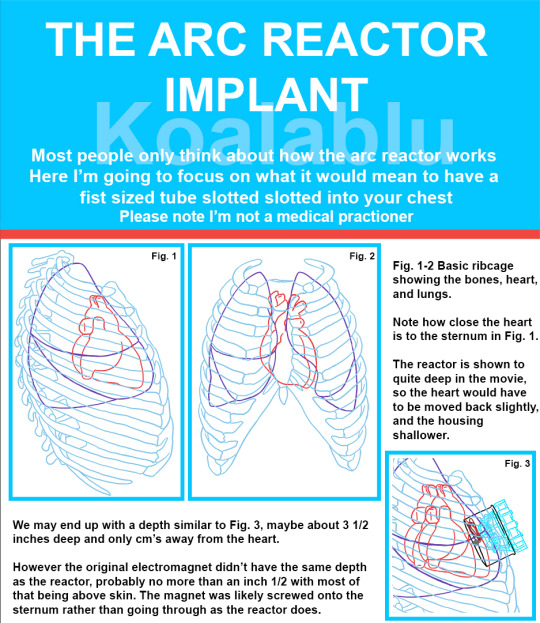
koalablu:

image
image
image
image
image
image
image
image
image
image

Wow this got out of hand a bit. All the research that went into this. I’m never doing this again but it was fun. Excuse me while I go die. Sorry if it’s a bit blurry, I was working very large.

On pinterest (slightly better quality):

 https://au.pinterest.com/pin/461267186821651481/

@kryptaria, a medical reference for Tony’s arc reactor implant.

Excellent! Thank you!

I read every word of it and loved it. What insane, detailed research! I wish the movies would take more of this into account, it explains the strength of the character much better when you get a proper idea of what he might have gone through.

@chamiryokuroi

Love how you tagged me on this

Fuck me up

chickenkeeping:

noivern:

carbisari:

blanketflowerbees:

tbh???? chickens are the best pets??

they

  • wag their tails (yes!!! like dogs!!!! they do it when they are exited or happy)
  • love eating treats and love whenever you pretend to peck things
  • get very attached to certain ppl, will think ur their mom
  • run around like dinosaurs??????? i don’t know if this is just my chickens but they are very dramatic when they run??
  • make VERY weird noises,,, like honking, purring, clucking, and peeping (soft peeping, they still think they are baby chicks)
  • will give you lots of pretty feathers 
  • eat bugs
  • you can pet them, v soft
  • like a tiny pet dinosaur

@noivern

additions:

  • if u raise them from small (or sometimes just anyway) you are Forever Mum and they will jump up on ur back and go to sleep
  • and preen you, rearrange your clothes and hair sometimes
  • dont like dealing with spiders in house? go outside. pick up chicken. hold chicken in vicinity of spider. spider vacuumed up in about 0.3 seconds.
  • make amusing Warning Noise when a Bad Bird goes overhead. sometimes this is something sensible like a raptor. sometimes it is a startling blackbird, or maybe nothing (maybe chickens can see extradimensional birds? unsure)
  • when chicken mama has babby chicken and they get in her feathers and poke their heads out
  • rooster is Very Protective but also thinks that maybe anything that peeps is Potential Flock Babies. has been known to bring food for goslings and ducklings
  • actually roosters in general are very cute. find food and go beep beep beep so ladies can find it. if you give him a nice treat he wont eat it and will go find a lady to give it to.

ive been blessed

Dwarves out of the Mountains

jonothetonedeafsidekick:

melredcap:

drferox:

A long-term friend of mine had been lamenting that while there seems to be a lot of push to diversify elves and ‘get them out of the forest’ but everybody seems content to leave the dwarves in their mountains. In my campaign world I do have dwarves still in the mountains, but I have a particular reason.

Dwarves, as a fantasy or rpg race typically have the following traits:

  • Short, stocky or round with a low center of gravity
  • Facial hair and plenty of it, sometimes on females as well
  • The Axe. If there’s no axe, there will be a hammer
  • Smiths, craftsmen and great builders
  • Beer, mead, ale… it’s all good as long as it’s not wine
  • Underground. Not just a little hole, but deep underground.

That’s a phenotype you can pick up and move anywhere, provided you can grow something you can then ferment and make into booze. So let’s see how they might fit in different environments.

  • Desert. If you’re going to live in the desert you have to worry about water and maintaining your body temperature, as it can get both unreasonably hot and cold in the desert, often switching from one extreme to another from day to night. Lots of animals have figured out that the temperature is much more stable underground and burrow, and the trees that survive find the water table. There are two very good reasons to build your home underground, and from there you expand your home into a city with networks etc. You can ferment the cacti. Darkvision would be handy as you’re not going to come up in the day if you can avoid it. I imagine they’d build large ventilation columns, a bit like termite mounds, reaching above the dunes, the only evidence of the city below.
  • Sea edge. I’m thinking cliffs, harsh and windswept towering above the churning waters. The windchill can be lethal, and the saltwater of the ocean is all but undrinkable without specialized processing. (Maybe they have that technology, maybe salt is a major export. Everybody needs salt before refrigeration.) Not much lives on sea cliffs aside from some agile birds that nest there, far out of reach of predators. Building your fortress into the side of the sea cliffs is a very defensible position, and there’s a huge amount of energy to be potentially harnessed in the wind and waves. Branching out into ships is difficult from cliffs, it may be easier to use underwater channels, if such a clever dwarf could devise a vessel to travel entirely beneath the waves. The lower tunnels of an sea cliff fortress are prone to flooding, so these dwarves are likely to be better at balancing and swimming than their inland brethren.
  • Ice. Where do you expect to find a phenotype that has a reduced body surface area to volume ratio (approaching spherical), comfortable insulating body fat and extra hair? Somewhere very cold. You can dig down into solid ice, which will be relatively more comfortable out of the wind chill, but if you build up with the excavated ice it will likely end up with snow accumulating on at least one side, eventually looking like a hill. Fireballs obviously strongly discouraged, and layered furs prefered over open flame for heat to preserve structural integrity.
  • Old forest. Nobody ever said anything about getting the dwarves out of the forest. I don’t mean your standard, idyllic, meadow filled forest. I mean the dark, overgrown, ancient, creaking forest with trees so old, massive and twisted that you can’t be certain they don’t have faces. The sort of forest where you can barely see the sky, and the hairs stand up on the back of your neck for no clear reason, but you can’t help but trust your instinct that something, somewhere is patiently waiting to eat you. Here it’s probably much safer underground, where you can at least establish a defensible position. I imagine large halls, edged with the passive roots of the still living trees, and probably a significant mushroom proportion in the diet. Elves above may not even know they’re there.

Really they can make themselves at home anywhere you need a defensible position. Break some stereotypes, throw some dwarves around.

(But you cannot toss them)

…Desert dwarves fermenting cacti for booze. So you’re saying… dwarves with tequila? XD

@determamfidd

15 facts about people with concealed anxiety

caughtthefox:

1. They don’t hide their anxiety, they hide their symptoms.
To have concealed anxiety isn’t to deny having it – only to do
everything in your power to ensure other people don’t see you struggle.

2. They have the most anxiety about having anxiety.
Because they are not comfortable letting people see them in the throes
of an irrational panic, the most anxiety-inducing idea is… whether or
not they’ll have anxiety at any given moment in time.

3. They come across as a paradoxical mix of outgoing but introverted, very social but rarely out.
It is not that they are anti-social, just that they can only take being
around others incrementally (which is mostly normal). Yet, on the
surface, this may come across as confusing.

4. They make situations worse by trying to suppress their feelings about them. They
are extremely uncomfortable with other people seeing them in pain, and
they don’t want to feel pitied or as though they are compromising
anyone’s time. Yet, they make things worse for themselves by
suppressing, as it actually funnels a ton of energy into making the
problem larger and more present than it already was.

5. They are often hyper-aware and highly intuitive. Anxiousness
is an evolutionary function that essentially keeps us alive by making
us aware of our surroundings and other people’s motives. It’s only
uncomfortable when we don’t know how to manage it effectively – the
positive side is that it makes you hyper-conscious of what’s going on
around you.

6. Their deepest triggers are usually social situations. It’s
not that they feel anxious in an airplane, it’s that they feel anxious
in an airplane and are stuck around 50 other people. It’s not that they
will fail a test, but that they will fail a test and everyone in school
will find out and think they are incompetent and their parents will be
disappointed. It’s not that they will lose love, but that they will lose
love and nobody will ever love them again.

7. It is not always just a “panicked feeling” they have to hide.
It can also be a tendency to worry, catastrophizing, etc. The battle is
often (always?) between competing thoughts in their minds.

8. They are deep thinkers, and great problem-solvers.
One of the benefits of anxiety is that it leads you to considering
every worst case scenario, and then subsequently, how to handle or
respond to each.

9. They are almost always “self-regulating” their thoughts.
They’re talking themselves in, out, around, up or down from something
or another very often, and increasingly so in public places.

10. They don’t trust easily, but they will convince you that they do. They want to make the people around them feel loved and accepted as it eases their anxiety in a way.

11. They tend to desire control in other areas of their lives.
They’re over-workers or are manically particular about how they dress
or can’t really seem to let go of relationships if it wasn’t their idea
to end them.

12. They have all-or-nothing personalities, which is what creates the anxiety.
Despite being so extreme, they are highly indecisive. They try to
“figure out” whether or not something is right before they actually try
to do it.

13. They assume they are disliked. While this is often stressful, it often keeps them humble and grounded at the same time.

14. They are very driven (they care about the outcome of things).
They are in equal proportions as in control of their lives as they feel
out of control of their lives – this is because they so frequently try
to compensate for fear of the unknown.

15. They are very smart, but doubt it. A high intelligence is linked to increased anxiety (and being doubtful of one’s mental capacity are linked to both).

http://neverignore.info/15-things-you-need-to-know-about-people-who-have-concealed-anxiety/