I always found shoes a bit of a mystery so I did a section just on them. It all gets down to that hump around the toes and then bending the toe-area and not any other part of the foot when adding heels.
I’m going to work on the landscape of the back next and then we’ll see!
This week I’ve prepared some tips for everyone who is confused with arms. I know that pronation and supination is confusing and I recommend to learn in by heart ❤
I have also announcement!
The day is approaching when I will release ebook or Gumroad PDF with all my anatomy tips + additional lessons + commentary.
I still am thinking how I will publish this but it will be done. Anyone who’s interested finally will be able to get everything in one place and some more good content. I will post some dates soon so look for that in next few weeks !
THOU is the subject (Thou art…) THEE is the object (I look at thee) THY is for words beginning in a consonant (Thy dog) THINE is for words beginning in a vowel (Thine eyes)
this has been a psa
Also, because H was sometimes treated as a vowel when the grammar rules for thou/thee/thy/thine were formed,THINE can also be used for words beginning with H. For example, both “thy heart” and “thine heart” appear in Elizabethan poetry.
For consistency, however, if you’re saying “thine eyes”, make sure you also say “mine eyes” instead of “my eyes”.
Further to the PSA:
Thou/thee/thine is SINGULAR ONLY.
Verbs with “thou” end in -st or -est: thou canst, thou hast, thou dost, thou goest. Exception: the verbs will, shall, are, and were, which add only -t: thou wilt, thou shalt, thou art, thou wert.
Only in the indicative, though – when saying how things are (“Thou hast a big nose”). Not in the subjunctive, saying how things might be (“If thou go there…”) nor in the imperative, making instructions or requests (“Go thou there”).
The -eth or -th ending on verbs is EXACTLY EQUIVALENT TO THE -(e)s ENDING IN MODERN ENGLISH.
I go, thou goest, she goeth, we go, ye go, they go.
If you wouldn’t say “goes” in modern English, don’t say “goeth” in Shakespearean English.
“Goeth and getteth me a coffee” NO. KILL IT WITH FIRE.
Usually with an imperative you put the pronoun immediately after the verb, at least once in the sentence (“Go thou” / “Go ye”).
YE is the subject (Ye are…). YOU is the object.
Ye/you/your is both for PLURALS and for DEFERENCE, as vous in French.
There’s more, but that’ll do for now.
Oh wow. Reblogging for reference.
i haven’t had my coffee yet, so all i can think of when i read through this is:
th’ain’t
th’dstn’t’ve
AND ANOTHER THING “thee/thou/thy” is informal “ye/you/your” is formal Also also…all of this is NOT Old English but is actually referred to as Early Modern English. If you were speaking Old English, it would sound closer to German.
^That.
And IT’S NOT MORE FORMAL to use THEE.
if you address someone you should use Thee or Ye (sometime used as the plural, sometimes it’s still Thee, rules are iffy) to as You, it’s an insult by intentional distance. If you call someone you should call You by Thee, it can be an insult via assumed intimacy.
(This is why some religions insist on still using Thee and Thou when talking to their Father God. Many of them modernly think it makes them sound more formal, but that’s not why the usage began, or why the more linguistically aware still do it. Not because it’s more formal, but because it’s LESS formal. You wouldn’t call your own Father “You” unless you wanted to imply disowning Him.)
Anyone you’re close to or on first name terms with can be Thee. Friends, family members, etc.
Anyone you want to point out is NOT your friend, respectfully or otherwise, is You. Which is why the King is still Your Majesty. You are decidedly not his friend unless you know each other really well. (See “Henry V”. If you can also call Henry by Harry or Hal, you can probably call him Thee.
One more note! “Ye Olde- as you see on shop signs is not prounounced Yee. There’s a character called a Thorn that was going out of style and being replaced by a curly thing that looks like a Y and IS NOT. It’s pronounced Th. THe olde apothecary shoppe. Not Ye Olde. That itself promptly went out of style as well but the error remains almost traditional.
and I am not addressing claims that I might be a vampire, lycanthrope, or other immortal just because I am fluent in Modern Middle English.
This whole post is a blessing because I read so much “ye olde” speak in historical stuff and everyone always gets their thee’s and thou’s wrong. Even big name authors with accuracy editors who ought to know better.
It’s more accurate to have your “poor folk” in your historical novel saying “thou” than it is to have the scholar or rich man with an education rooted in Latin, unless he’s down the pub with his mates, merry as a knave.
The whole thing just reminds me of people using Polonius’ speech in Hamlet (“to thine own self be true”), completely out of context, not realizing that the speech is intended to show Polonius as a foolish old hypocrite who enjoys dishing out council but rarely follows his own convoluted advice, which is often contradictory and falsely pious.
Which, I mean, Shakespeare often isn’t taught well outside of higher education, lets be honest. So why would they know unless they’ve studied it beyond the passing glance it gets that one year in high school before been relegated to the position of “too posh and old to be relevant” which is entirely not true.
Shakespeare is written in the language of the people, and is often more insightful and progressive than certain types of academics would like you to believe.
I’m so glad someone put this together. ASIANS DO NOT ALL HAVE THE SAME EYES.
it’s so crazy to me that ppl think east asian ppl have the same eyes which just goes to show those people either don’t have east asian friends or aren’t exposed to them at all cos there’s A LOT of varying eye shapes. they’re not all monolids either!
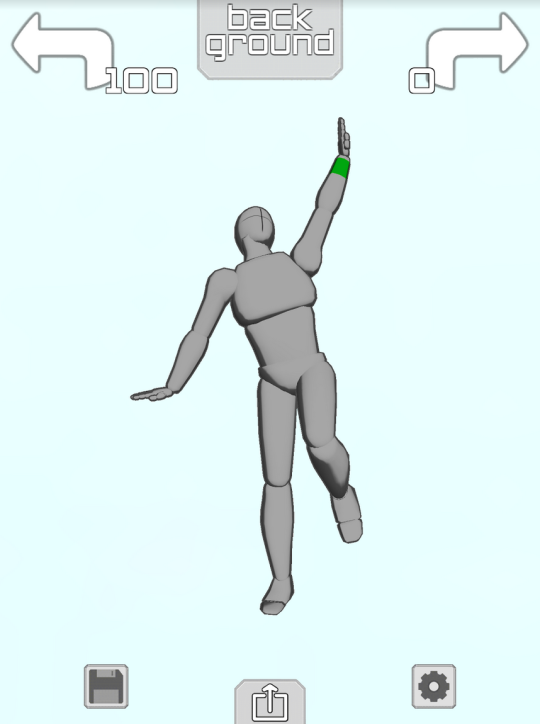
if you have an ipod or iphone or ipad or whatever then Please download the app “Make a Pose”
it gives you a lil figure like this
and you can make them do whatever you want!! Like
Took me about 1.4 minutes to make this sad little guy it’s Really easy to get the hang of
they Happy
you can change the camera angle so easy too so you can get perspective + foreshortening reference
THIS IS ALL FREE TOO but if you pay $2 you unlock the ability to have two figures onscreen at the same time so you can make COUPLE POSES
AND YOU CAN CHANGE THE LIGHTING,
you can also make rooms and place some objects or characters like so:
YOU WANT A CHARACTER W/ A BIGGER CHEST? HERE THEY ARE
YOU WANT A FRICKIN HORSE?
NEIGH NEIGH MOTHER FUCKER
ANYWAY YOU CAN PAY ABSOLUTELY $0 TO GET THE APP WITH THE ABILITY TO POSE ONE FIGURE AT A TIME AND IF YOU PAY $2 YOU GET TO PUT UP TO 6 CHARACTERS ON THE SCREEN AT ONCE AND YOU ALSO GET A GOTDAMN HORSE. again it is called “Make a Pose” and it’s for iphone or ipod touch or ipad and i cannot recommend it enough




 There's a Mirror on the Wall