Here’s a general rule: People in the past were ignorant about a lot of things, but they weren’t stupid. If they used something, chances are they had a good reason. There are exceptions, but plate armor is not one of them.
Long Answer:
For a type of armor, no matter what it is, to be considered effective, it has to meet three criteria.
The three criteria are: Economic Efficiency, Protectiveness, and Mobility.
1. Is it Economically Efficient?
Because of the nature of society in the Middle Ages, what with equipment being largely bring-it-yourself when it came to anybody besides arrowfodder infantry who’d been given one week of training, economic efficiency was a problem for the first couple of decades after plate armor was introduced in France in the 1360s. It wasn’t easy to make, and there wasn’t really a ‘science’ to it yet, so only the wealthiest of French soldiers, meaning knights and above, had it; unless of course somebody stole it off a dead French noble. The Hundred Years War was in full swing at the time, and the French were losing badly to the English and their powerful longbows, so there were plenty of dead French nobles and knights to go around. That plate armor was not very economically efficient for you unless you were a rich man, though, it also was not exactly what we would call “full” plate armor.
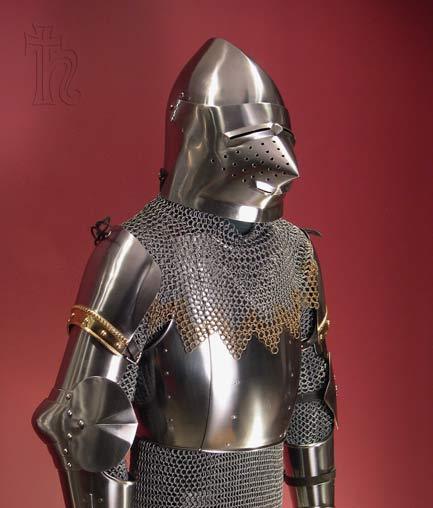
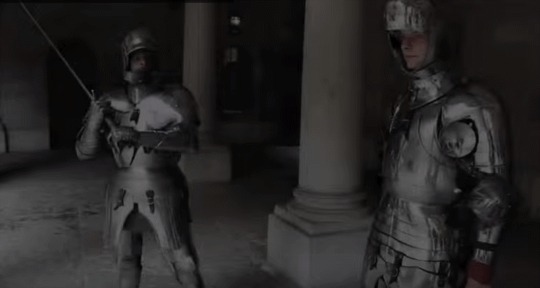
Above: Early plate armor, like that used by knights and above during the later 1300s and early 1400s.
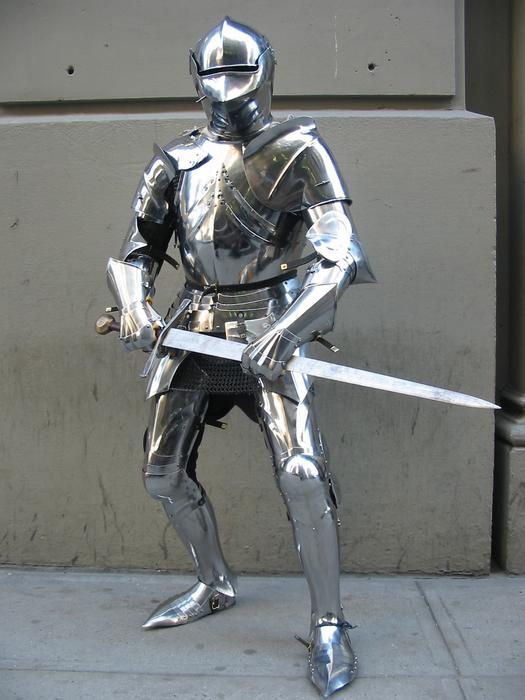
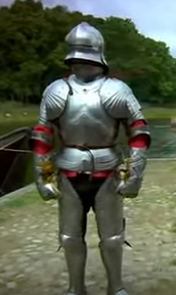
Above: Two examples of what most people mean when they say “full” plate armor, which would have been seen in the mid to late 1400s and early 1500s.
Disclaimer: These are just examples. No two suits of armor were the same because they weren’t mass-produced, and there was not really a year when everybody decided to all switch to the next evolution of plate armor. In fact it would not be improbably to see all three of these suits on the same battlefield, as expensive armor was often passed down from father to son and used for many decades.
Just like any new technology, however, as production methods improved, the product got cheaper.
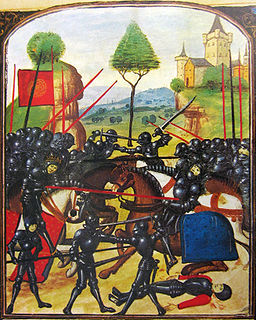
Above: The Battle of Barnet, 1471, in which everybody had plate armor because it’s affordable by then.
So if we’re talking about the mid to late 1400s, which is when our modern image of the “knight in shining armor” sort of comes from, then yes, “full” plate armor is economically efficient. It still wasn’t cheap, but neither are modern day cars, and yet they’re everywhere. Also similar to cars, plate armor is durable enough to be passed down in families for generations, and after the Hundred Years War ended in 1453, there was a lot of used military equipment on sale for cheap.
2. Is it Protective?
This is a hard question to answer, particularly because no armor is perfect, and as soon as a new, seemingly ‘perfect’ type of armor appears, weapons and techniques adapt to kill the wearer anyway, and the other way around. Early plate armor was invented as a response to the extreme armor-piercing ability of the English longbow, the armor-piercing ability of a new kind of crossbow, and advancements in arrowhead technology.
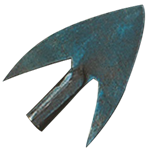
Above: The old kind of arrowhead, ineffective against most armor.
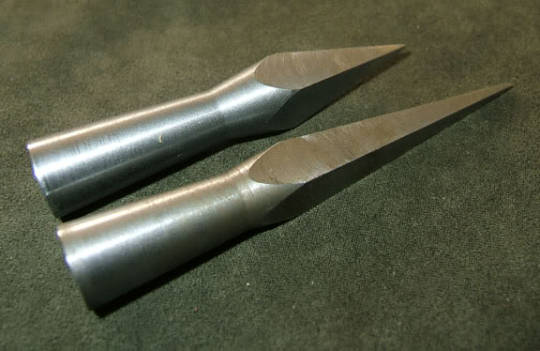
Above: The new kind of arrowhead, very effective at piercing chainmaille and able to pierce plate armor if launched with enough power.
Above: An arrow shot from a “short” bow with the armor-piercing tip(I think it’s called a bodkin tip) piercing a shirt of chainmaille. However, the target likely would have survived since soldiers wore protective layers of padding underneath their armor, so if the arrow penetrated skin at all, it wasn’t deep. That’s Terry Jones in the background.
Above: A crossbow bolt with the armor piercing tip penetrating deep through the same shirt of chainmaille. The target would likely not survive.
Above: A crossbow bolt from the same crossbow glancing off a breastplate, demonstrating that it was in fact an improvement over wearing just chainmaille.
Unfortunately it didn’t help at all against the powerful English longbows at close range, but credit to the French for trying. It did at least help against weaker bows.
Now for melee weapons.
It didn’t take long for weapons to evolve to fight this new armor, but rarely was it by way of piercing through it. It was really more so that the same weapons were now being used in new ways to get around the armor.
Above: It’s a popular myth that Medieval swords were dull, but they still couldn’t cut through plate armor, nor could they thrust through it. Your weapon would break before the armor would. Most straight swords could, however, thrust through chainmaille and anything weaker.
There were three general answers to this problem:
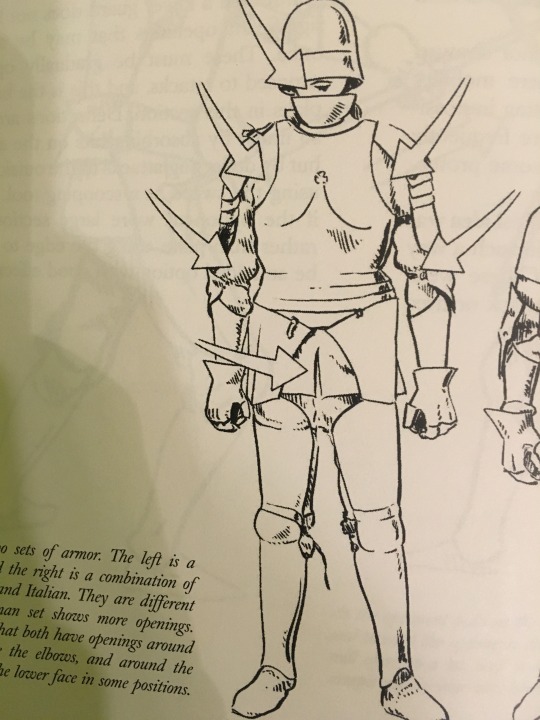
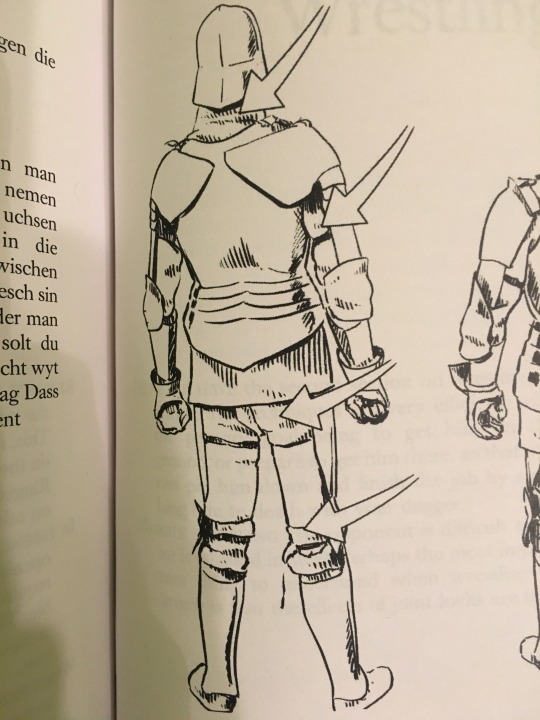
1. Be more precise, and thrust through the weak points.
Above: The weak points of a suit of armor. Most of these points would have been covered by chainmaille, leather, thick cloth, or all three, but a sword can thrust through all three so it doesn’t matter.
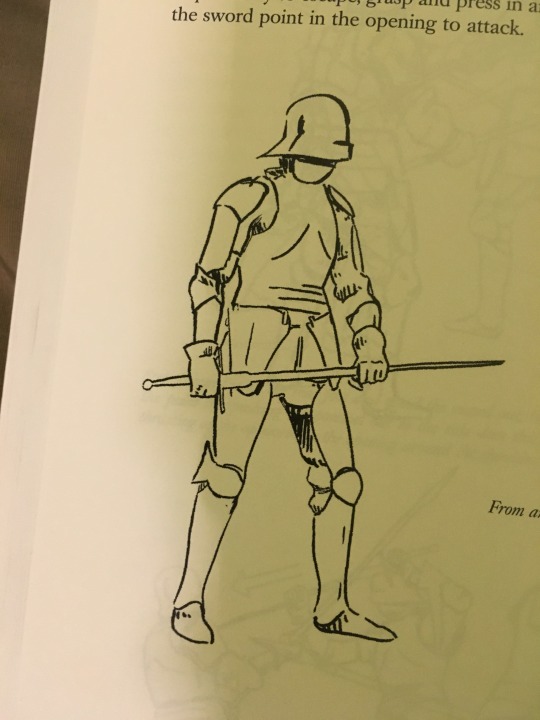
To achieve the kind of thrusting accuracy needed to penetrate these small gaps, knights would often grip the blade of their sword with one hand and keep the other hand on the grip. This technique was called “half-swording”, and you could lose a finger if you don’t do it right, so don’t try it at home unless you have a thick leather glove to protect you, as most knights did, but it can also be done bare-handed.
Above: Examples of half-swording.
2.Just hit the armor so fucking hard that the force carries through and potentially breaks bones underneath.
Specialty weapons were made for this, but we’ll get to them in a minute. For now I’m still focusing on swords because I like how versatile the European longsword is.
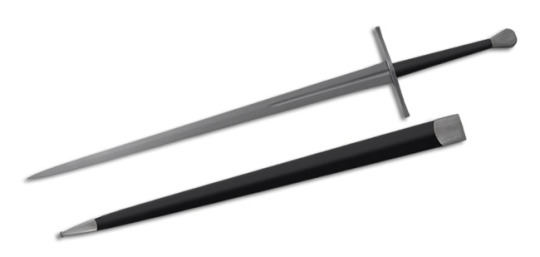
Above: A longsword. They’re made for two-handed use, but they’re light enough to be used effectively in one hand if you’d like to have a shield or your other arm has been injured. Longswords are typically about 75% of the height of their wielders.
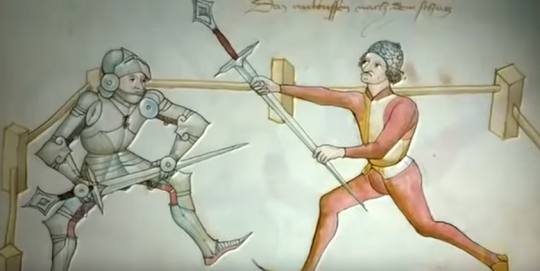
Assuming you’re holding the sword pointing towards the sky, the part just above the grip is called the crossguard, and the part just below the grip is called the pommel. If you hold the sword upside-down by the blade, using the same careful gripping techniques as with half-swording, you can strike with either the crossguard or the pommel, effectively turning the sword into a warhammer. This technique was called the Murder Stroke, and direct hits could easily dent plate armor, and leave the man inside bruised, concussed, or with a broken bone.
Above: The Murder Stroke as seen in a Medieval swordfighting manual.
Regular maces, hammers, and other blunt weapons were equally effective if you could get a hard enough hit in without leaving yourself open, but they all suffered from part of the plate armor’s intelligent design. Nearly every part of it was smooth and/or rounded, meaning that it’s very easy for blows to ‘slide’ off, which wastes a lot of their power. This makes it very hard to get a ‘direct’ hit.
Here come the specialized weapons to save the day.
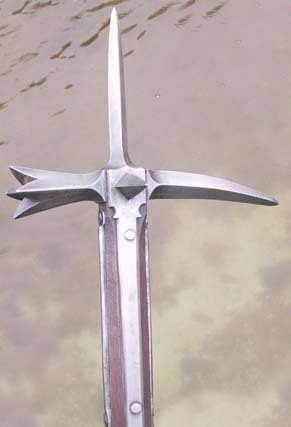
Above: A lucerne, or claw hammer. It’s just one of the specialized weapons, but it encompasses all their shared traits so I’m going to only list it.
These could be one-handed, two-handed, or long polearms, but the general idea was the same. Either crack bones beneath armor with the left part, or penetrate plate armor with the right part. The left part has four ‘prongs’ so that it can ‘grip’ smooth plate armor and keep its force when it hits without glancing off. On the right side it as a super sturdy ‘pick’, which is about the only thing that can penetrate the plate armor itself. On top it has a sharp tip that’s useful for fighting more lightly armored opponents.
3. Force them to the ground and stab them through the visor with a dagger.
This one is pretty self-explanatory. Many conflicts between two armored knights would turn into a wrestling match. Whoever could get the other on the ground had a huge advantage, and could finish his opponent, or force him to surrender, with a dagger.
By now you might be thinking “Dang, full plate armor has a lot of weaknesses, so how can it be called good armor?”
The answer is because, like all armor is supposed to do, it minimizes your target area. If armor is such that your enemy either needs to risk cutting their fingers to target extremely small weak points, bring a specialized weapons designed specifically for your armor, or wrestle you to the ground to defeat you, that’s some damn good armor. So yes, it will protect you pretty well.
Above: The red areas represent the weak points of a man not wearing armor.
Also, before I move on to Mobility, I’m going to talk briefly about a pet-peeve of mine: Boob-plates.
If you’re writing a fantasy book, movie, or video game, and you want it to be realistically themed, don’t give the women boob-shaped armor. It wasn’t done historically even in the few cases when women wore plate armor, and that’s because it isn’t as protective as a smooth, rounded breastplate like you see men wearing. A hit with any weapon between the two ‘boobs’ will hit with its full force rather than glancing off, and that’ll hurt. If you’re not going for a realistic feel, then do whatever you want. Just my advice.
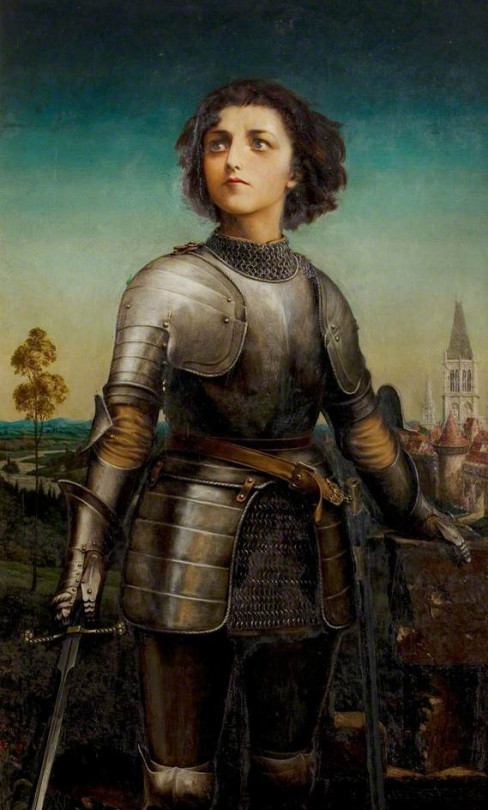
Above: Joan of Arc, wearing properly protective armor.
An exception to this is in ancient times. Female gladiators sometimes wore boob-shaped armor because that was for entertainment and nobody cared if they lived or died. Same with male gladiators. There was also armor shaped like male chests in ancient times, but because men are more flat-chested than women, this caused less of a problem. Smooth, rounded breastplates are still superior, though.
3. Does it allow the wearer to keep his or her freedom of movement?
Okay, I’ve been writing this for like four hours, so thankfully this is the simplest question to answer. There’s a modern myth that plate armor weighed like 700 lbs, and that knights could barely move in it at all, but that isn’t true. On a suit of plate armor from the mid to late 1400s or early 1500s, all the joints are hinged in such a way that they don’t impede your movement very much at all.
The whole suit, including every individual plate, the chainmaille underneath the plates, the thick cloth or leather underneath the chainmaille, and your clothes and underwear all together usually weighed about 45-55 lbs, and because the weight was distributed evenly across your whole body, you’d hardly feel the weight at all. Much heavier suits of armor that did effectively ‘lock’ the wearer in place did exist, but they never saw battlefield use. Instead, they were for showing off at parades and for jousting. Jousting armor was always heavier, thicker, and more stiffly jointed than battlefield armor because the knight only needed to move certain parts of his body, plus being thrown off a horse by a lance–even a wooden one that’s not meant to kill–has a very, very high risk of injury.
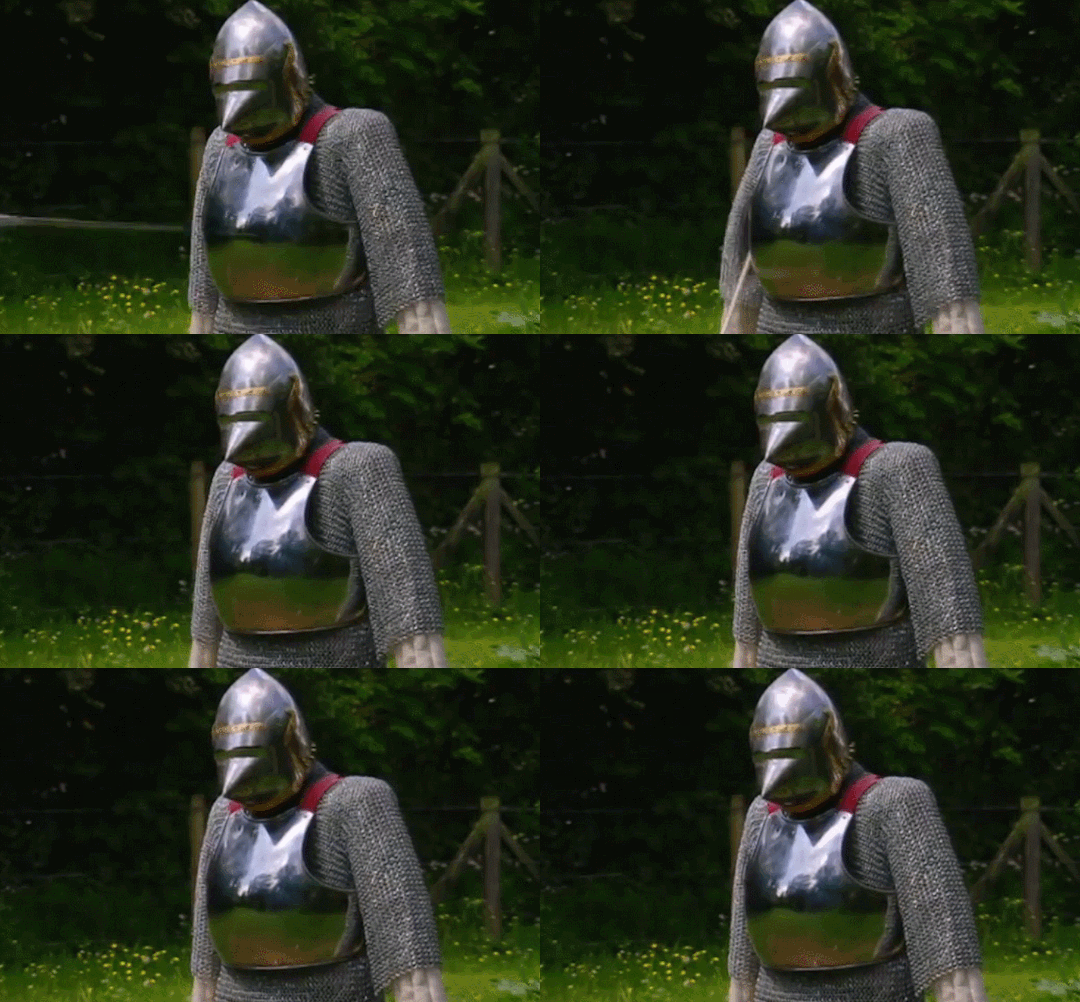
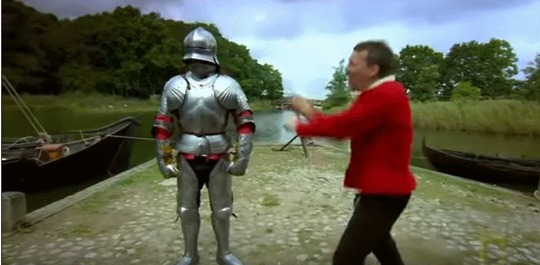
Here’s a bunch of .gifs of a guy demonstrating that you can move pretty freely in plate armor.
Above: Can you move in it? Yes.
Here are links to the videos that I made these .gifs from:
You’re written a very good article. I believe it deserves a full-length reply. As much as I enjoyed it, there are just a few corrections I’d like to make, and more than a couple clarifications.
First off, just to get it out of the way, I’ve never actually found any account of “arrowfodder infantry” being used historically by any medieval army in Europe. Generally speaking, you would want all your soldiers to be skilled, trained and properly equipped. No matter how much money you had, cost-effectiveness was always something to strive for, and having thousands of useless soldiers who can do nothing but take arrows and die is simply not worth it, especially since they will also be eating your food while they’re still alive. If you wanted to protect your army from enemy archers, you used armor, shields, fortifications and the terrain itself.
Now, about the introduction of plate armor. If we’re talking about what most people think when they hear the term, then yes, that shows up on the second half of the 14th century. Your first picture is a good example of this (that being said, that mail mantle is a much later piece, used here to imitate the mail aventail that would hang from the edges of the helmet). However, solid metal plates have been used as armor for hundreds of years before. Even if we ignore the entire Bronze Age, the Roman Empire and the concept of helmets, we still have to look back at least as far as the 13th century. Schinbalds were curved metal plates strapped on the lower legs to protect the shins. Poleyns were introduced shortly after to protect the knees.
Around the middle of that century, the coat of plates appeared. It was the first step in what could be considered plate armor. It consisted of slightly curved overlapping plates riveted to the inside of a leather or fabric garment shaped like a surcoat. The plates themselves mainly covered the torso and sides, and perhaps some of the back. Below is a drawing of a Teutonic Knight wearing armor of this type, from Osprey Publishing.
Later the structural garment would become shorter and in some cases include decorations of many kinds.
The coat of plates developed in two directions. In one case, the plates got progressively larger, eventually evolving into the globular breastplate we’re all familiar with. Below is a reproduction of a transitional model, somewhere between a mid-14th century coat of plates and an early breastplate. It was beautifully crafted by Piotr Feret.
The chains in models like this served to secure the sword, dagger, great helm and any other object the wearer wouldn’t want to drop and lose. Below we can see the plates before they were finished and riveted to the fabric facing.
Here we can clearly see the similarities between this type of armor and a breastplate. The large plate meant to cover the chest already has the beginnings of that characteristic globular shape meant to deflect blows. Of course, early versions of the globular breastplate were also covered in fabric or leather, which also served to attach it to the fauld or laminated skirt of plates that hanged from it. Below is a set of armor by renowned blacksmith Jeff Wasson featuring one of these pieces, based on historical examples from around the year 1380.
At this point it’s worth noting that breastplates, specifically the solid globular piece, only cover the area of the torso demarcated by the ribs. This is so that the wearer doesn’t lose any flexibility on their waist. The hips and abdomen were protected by the much more flexible fauld.
On the other side of the spectrum we have the coats of plates which eventually evolved into the bringandine. This was a set of much smaller overlapping plates attached to the inside of a vest-shaped garment, usually open at the front, narrower at the waist for purposes of mobility and weight distribution. Below is a model by Armour Services Historical.
This example has a wool facing and is decorated with brass rivets and a Cross of Saint George, characteristic of English soldiers who served in France. Below is a picture of the inside of a similar piece by the same maker, showing the multitude of plates.
The brigandine remained extremely popular all through the 15th century and even well into the sixteenth century, though of course styles changed with time. There even was a variant of it during the Renaissance called a jack of plates, in which the plates were sewn to the inside of a garment which was more similar to civilian clothing, though still unmistakably armor. These could be worn by virtually any kind of soldier, from infantry archers to mounted men-at-arms. They were considerably more comfortable than solid breastplates, and provided a similar level of protection. Solid breastplates did have one considerable advantage, their potential for heat-treating, which I will explain further on.
You say only the wealthiest and most French of individuals could afford “full plate” armor. I’m going to have to disagree with that. While it is true that the French were famous for being able to field large numbers of heavy cavalry and infantry, during most of the Hundred Years War their suits of armor were far from complete. They were very likely to trade the protection of some of the less essential elements of armor in exchange for comfort and mobility. For example, I can tell that the first picture you posted is most likely based on a French suit of armor because of the lack of fauld on that breastplate. On the other hand, English armor of the same period, particularly the early 15th century, was extremely protective, going as far as to cover even the inside of the upper arms. Below is a picture of such a suit of armor, from Osprey Publishing.
Of course, such a suit of armor would be extremely expensive, but this didn’t mean less wealthy soldiers had to rely solely on mail to protect themselves. Bringandines were relatively cheap, for example, and you could simply buy the elements of plate armor you considered more essential, perhaps even resorting to pieces of lesser quality to reduce the cost. Even in the late 15th century, when plate armor became more common, most soldiers were not wearing the full harness. Below is a harness from Best Armour, which could have been used by an infantryman in the middle of the 15th century.
Note how only the torso, head, shoulders, hips and upper arms are protected. The pieces hanging from the fauld, by the way, are called tassets, a common element of plate armor from the 15th century onward. The armor covering the face is called a bevor, attached to the gorget which covers the throat. It could be hinged down to allow easier vision and ventilation. Under the armor a soldier would of course also wear a padded jack and perhaps a pair of sleeves and a skirt of mail.
Also, while in theory you could take any kind of equipment from a fallen enemy or inherit it from a relative, when it comes to solid body defenses you’d ideally want to have them made specifically for you. This would absolutely ensure that it fits you properly, which is vital for having both protection and mobility.
Now, regarding how effective armor is and how it can be defeated. I’m not sure exactly why you think plate armor was created specifically to defeat the English longbow, or that there was such as thing as a new armor-piercing crossbow. Armor in general served and was constantly developed to protect against weapons of any kind, and the breastplate wasn’t any different. The English longbow was a very powerful and effective weapon, but it wasn’t some sort of alien and terrifying artifact for the people of continental Europe. Longbowmen were used as mercenaries by all nations in a multitude of conflicts.
Crossbows were also very common, and in fact ancient. Military crossbows may even predate military bows. If you’re referring to crossbows with steel prods, you have to keep in mind that crossbows in general were never a lot more powerful than bows. For example, a 350 pound crossbow would be roughly as powerful as an 80 pound longbow, which was the lower end of the military longbow power spectrum. This is because the draw length of a bow is much longer than that of a crossbow. Take diminishing returns into account and the most powerful crossbows wouldn’t really have been a lot more powerful than the most powerful longbows. The one huge advantage they did have, however, was that they were a lot easier to aim. You can wind a crossbow and have it ready to shoot for hours. You could position yourself behind a fortification or a large shield and patiently wait for your target to come into range, aim carefully, and shoot accurately. When you draw a longbow, you really only have a couple of seconds to aim, before you get exhausted from holding that string at full draw and have to release it. Expert weapon craftsman Leo Todeschini can probably explain it better. Below is a crossbow that wouldn’t be out of place in the late 15th century, by Leo Todeschini.
This decorated weapon would most likely be used for hunting, but a more simple version would be an excellent weapon of war. It uses a cranequin as a winding mechanism, and has 450 pounds of power in that steel bow.
Regarding arrowheads, you can’t really talk of old obsolete arrowheads and new revolutionary models. All of those existed roughly at the same time, and served different purposes. The long bodkin in fact can be traced all the way back to the Viking era, or perhaps even earlier. The broad cutting arrowheads with large barbs were mostly used for hunting, though of course they could be used very effectively against unarmored humans. The bodkin had an easier time penetrating mail, since its narrow profile could get between the links with much less resistance, though it would still have to penetrate the padded armor that was commonly worn underneath. You could also find less specialized arrowheads with narrow heads and small barbs, a compromise of the two other models. And of course there were numerous other types of arrowheads which I won’t go into here.
Now, how do arrows fare against steel breastplates? Well, a standard broad hunting arrowhead won’t do any good. A bodkin won’t be very effective either, the long point will bend before it penetrates. In any case, anything but an almost perpendicular hit would simply glance off the rounded surface, which is exactly the purpose of that shape. There was a type of heavy arrowhead, with a squared profile and a heavy body. It’s very commonly seen on crossbow bolts. Leo Todeschini has referred to it as a quarrel head. If any type of arrow has any chance of piercing plate armor it’s that one, though perhaps it’d have to be aimed at the thinnest plates. Of course, you could always hope that your arrows landed on the gaps of the armor, and take your chances at penetrating the mail and padding, or perhaps see if your bodkin can slip past the visor. Alternatively, you could choose to not aim directly at the knights or men-at-arms. Terry Jones said it himself. “Never mind the chivalry, kill the horses.”
Horses were a lot more difficult to armor than humans. Mail and padded armor existed, but they weren’t used very often, most likely because of how much they affected the horse’s body temperature as it galloped. Proper full plate armor for horses didn’t really appear until the end of the fifteenth century, and even then it was reserved for the heaviest cavalry. Usually horses would at most wear a chanfron, a simple piece of armor to protect the horse’s head. This piece went as far back as the Roman Empire. Below is a drawing of three German soldiers, from Osprey Publishing.
See how only parts of the horse are covered in steel plates, and the rest is either uncovered or protected by mail. Also, the mounted crossbowman at the back rides on an unarmored horse, as would most cavalrymen. Also note the infantryman wearing only a partial harness, including a style of brigandine reinforced by a placard, the lower portion of a late 15th century breastplate.
Now, there’s one vital element that can make a breastplate virtually impervious to all projectiles. This invisible ingredient is hardness. A skilled 15th century blacksmith could use his forge and a barrel of water to heat-treat a breastplate and turn it from a simple steel plate into a spring, perfect for resisting any blow that may strike it. This process was usually done on the breastplate and the helmet, which were also the thickest parts of the full plate harness. Thinner parts of the armor, like the sides of the visors, would be much easier to penetrate.
About longswords, it all seems very accurate and well researched. I just have two things to say. First, the longest longswords I’ve seen were about 50 inches long, while the shortest were a little over 40 inches. Second, you don’t really need leather gloves to do halfswording as long as you grip the blade firmly. The you will only get cut if you run your hand up or down the edge while putting pressure on it.
The weapon you showed in that picture, which many call Lucerne hammer (after the Swiss city of the same name) but can also be called by a multitude of other names, is a variant of the pollaxe (also called by many other names), a specialized weapon for armored combat. These were generally speaking about as tall as the wielder and had a combination of spikes, axes and hammers on top of a pole, and sometimes a simple spike at the bottom end. Nikolas Lloyd explains it more concisely than I ever could. Below is a reproduction of an English pollaxe by Josh Davis.
Of course, another anti-armor weapon worth considering was the gun. Handheld firearms have been around since the fourteenth century, and while they were extremely inaccurate, at close range or in volleys of fire they could be a threat to armored soldiers. A hardened breastplate could still deflect these shots, but if hit in the thinner parts of his armor a soldier would be in great trouble. Below is a reproduction of a hand gun from the early 15th century, by The Rifle Shoppe.
The rest of your article is fairly spot-on… except the bit about female gladiators, I don’t know where that came from. At least if we’re talking about Rome, we don’t have any evidence of female gladiators wearing any kind of torso protection. In addition, I would add perhaps ten or twenty pounds to your estimation of the weight of a full plate harness. I’d also like to point out that, as awesome as that portrait of Joan is, that armor belongs in the sixteenth century. Armor of her time would be more similar to the seventh image in my reply. Finally, just to be clear, regular cavalry armor would also be suitable for jousting, just not as specialized as actual jousting armor. And of course, the military exercises that eventually developed into the sport of jousting were in practice long before the development of plate armor.
I’m curious– What style of clothing would y’all wear if…”
Omg PLEASE wear those things
What I actually have of it, I will wear when I’m not feeling entirely too tired to manage more than grabbing the first clean clothes that come to hand (which usually ends up being a t-shirt).
The jewelry… oh, I wish I could afford that, but right now, I do not have the money, and I also don’t know who to go to in order to get what I want made. Honestly, some of it, beyond materials and vague thoughts, I don’t know what exactly I want. Although if I could have jeweled steel hair pins, I would… *pauses* I need to talk to my favorite blacksmith and his lady about that. Right. Birka. Talk to them at Birka.
Cotton dress shirts – I have one, I think. And a linen one. They are not yet tailored as close as I’d like because (a) time + money + spoons, and (b) want to deal with shaping undergarments first. Made of linen or cotton or silk. Laced and maybe boned. Supportive of an unhappy spine and the too much boob for me.
Linen trousers are something I’m going to not worry about until February, I think. And probably with a drawstring at the moment, rather than a waistband and fastenings, because spoons.
Silk-lined wool… I do not currently have the fabric to try for those, and finding suitable of either is a pain. (And the entire reason for the silk lining is because wool is itchy.)
I have one brocade waistcoat! With silk! The brocade is not silk and the silk is not brocaded, but I’m happy with it nonetheless, because it is awesome. And reversible. One side is lovely black brocade, the other is periwinkle silk. I need to find which bin it’s in and get it out and wear it more often.
The tunics part… erm. That’s a lot because of the lovely, lovely tunics that @lferion sent just before Pennsic. That I would have worn all Pennsic if I hadn’t had a niggling worry about what people might think of me wearing the same two tunics for two weeks. I should make sure to get pictures of me wearing them, because they made me feel fantastic!
Cotton knit hose… may be difficult to find commercially without any damned synthetic in it. But! If I can find decent cotton knit fabric, I can make hose. With a seam, which is fine.
The cloak is in the process of being decorated, after which it will be lined in silk, and the edges toward the top, and the entire hood, will be lined in rabbit fur. It may be another decade before it’s done, but it will be done sooner or later. I need to remember to get that out of the RV so that I can work on that when I’m having trouble dealing with crochet, and need something to do with my hands while watching movies or tv shows.
Two silk coats with tails, which need some alterations, which mostly needs someone else to help me pin it. And may actually end up waiting until next year Pennsic, because then I can get some assistance from the person who made them for me. For a lovely wool one, same issue as with silk-lined wool trousers, that I don’t have the fabric.
See lack of fabric for lack of great coat, as well. (And the flowing gowns, too.)
Have the floppy hat! Have to find where I put it, and wait for suitably chilly weather to wear it.
And I have one set of boots, low boots, with the gleaming buttons and the soft leather and they are fantastic, and it’s going to take quite a bit of money to get the tall ones from the same people. It will be worth it, but it’s going to be a while.
… use certain things that tumblr has made less visible, the idiots. It might have been a while, but I haven’t seen a thing on how to use things go around lately, so.
Reblogging this because (a) it is probably useful for people still, and (b) because I am going to add a little more on how to add extra stuff to text posts, particularly on embedding videos.
Below the cut because this is an image heavy post, which gets long.
@rising–dawn – this one’s for you, because yes, replying to replies is a pain. 🙂 Especially, as I understand it, when you don’t have anything beyond the base of tumblr, which doesn’t have options for replying to replies, other than as a reply to your own post. Which is… less than helpful.
For how I get the ability to reply to replies, see the image-heavy below the cut.
First, you will want to go get @new-xkit-extension, because otherwise this won’t work.
You should see this in your header when you have it:
Once you have x-kit, you will also have this, because it comes as part of the basic extension:
This is once of the best things about x-kit, in my opinion.
You get options with this. The two I have circled are the most likely to slow down or even crash your browser:
I don’t use the in-dashboard reply because I get enough notifications that I don’t have them show up in my dashboard anyway.
So, you’ll want to be on your activity page, reachable either here:
or here:
Once you are there, you hover your cursor over a reply, and this should come up:
Sometimes you’ll get a little x first, which is annoying, so if that happens, move your cursor away, and try again. Might take two or three tries. I tend to glare at my computer at that point.
Once you click on that little arrow, you should get this:
You can also reply to multiple replies/reblogs, just hold down the option key while clicking the little arrows, and it should look like this:
Then you click without holding the control key on any one of the little arrows, and it should come up like this:
Changing the names to @ mentions involves deleting the linked names and redoing it as mentions, which is going to be less likely to crash than trying to do it through x-kit.
And if anyone would like me to add further tutorials with images to this post for things on tumblr or with x-kit, let me know! I will do my best to make one of these for it. With the caveat that there are some of the x-kit extensions I don’t use, because the more you add, the more chances of slowing things down – and also, sometimes tumblr breaks things too much to use a particular bit (like editable reblogs. I am not dealing with losing large chunks of posts with that again).
Achievement unlocked: actually got hair fully combed for the first time in two weeks. All of it, at the temples (often very painful to comb), and the back of my head (hard to reach when flexibility is low), from root to tip (hair goes to the middle of my thighs when loose, and to my knees when wet, so very long).
And it is braided in two braids (which makes it easier to actually deal with than a single braid).
*sighs* Now hopefully I can manage to continue to have enough spoons to do that at least every two or three days (every day would be nice, but I have to do other things too, so not happening every day right now).
(Also, anyone who suggests cutting it to make it more manageable can go sit in scummy pond water up to their eyeballs. Scissors do not come near my hair ever again on that scale.)
Congrats! Also for the length! I’m not disciplined enough, so I’m still ‘only’ at a couple centimeters under waistlength because rough handling + dryness –> it breaks off –> split ends –> cutting the tips
Thank you!
While I can’t recommend anything to reduce rough handling other than start combing from the tips and work your way up when taking out tangles, I do have some things I use that might be helpful for the dryness issue*. Provided that it’s not genetics screwing you over with hair length, in which case, it’ll still be that long, but will hopefully have fewer split ends.
And I have limited energy, so my hair doesn’t get daily care, it gets combed every two or three days, and anything else happens less often.
Below the cut because long post is getting long.
Wooden combs – and natural bristle brushes, but I generally prefer and recommend combs over brushes – help pull the natural oils from your scalp to the tips. They’re also not very prone to breaking unless you get one that has a flaw in the wood (it happens). Or if they have a handle, and your hair has a habit of eating grooming instruments.
Hair oil. Olive oil will work fine, and The Vagabond Tabby does some glorious custom order stuff with essential oils. I get a rosemary-peppermint one because that’s a scent that tends to work with me. I got a 2oz bottle about a year ago, and I have used maybe a quarter of it since then (usage will vary by season, humidity, and how much your scalp produces oil). Usually it only goes on once every week/every other week, for me.
And my hair only gets washed once every two to three months. Rinsed more often, as I can, but only washed rarely, because my hair doesn’t do well with modern shampoos or conditioners a lot. Don’t know if that might be part of your problem or not, but if you comb your hair every day to get dust/debris/tangles out, it doesn’t actually need cleaned with shampoo every day when it gets long. Once a week to once every three months, depending on your hair, energy levels, activity levels, and gross factor.
Also, wash your comb/brush regularly, it helps keep it from building up oil and dust. (One of today’s chores is in fact, cleaning my comb, because one of the side effects of it picking up oil is it makes it easier for the dust to stick to it even after combing hair, and it’s gone all gray around the tops of the tines.)
A pair of tweezers, a soft cloth, and patience are what I usually rely on for cleaning, because it’s easier for me than dealing with running water and waiting for the comb to dry afterward. (Tweezers to pick out the worst clots of oil-and-dust, and to scrape the sides of the tines gently, then the fabric to make sure the stuff that’s in places hard for the tweezers to clean comes out, as it’s usually loosened nicely at that point.)
I end up sitting with a pair of embroidery scissors and taking off an average of three millimeters off any hair with a split end every four to six weeks.
*Caveat – I don’t know how well some of this will work with hair that has significant curl or other texture to it, because my hair doesn’t, just a lot of fine-but-densely packed hair.
I WAS EXPECTING IT TO BE A REMAKE OF SOME SORT HOLY FUCK
WHO THE FUCK KEEPS BRINGING THIS BACK
reblog this because it shows up every blue moon
I FOUND IT ✊
I WAS SO SCARED IT WOULDNT BE THE ORIGINAL
So, while I’m thinking about it, I went looking for suitable images that capture the personality of each of the currently named clone OCs in All Her Daughters. Image heavy post below the cut.
First, Wrath, because she was the first one I created:
Now for the Jango-clones. And some of the better ones to capture the personality for these are more recent ones of Temuera Morrison, and I definitely have to do the art in order to make sure I have their tattoos, but. Personality in a picture!
Starspun, sans the constellation tattoo that he informs me only just now is on his face. I think he got it sometime after the incident which earned Wrath her name.
@elegantmess-southernbelle and I were throwing around thoughts on who we’d like to see better as Clint Barton/Hawkeye than Jeremy Renner, and we thought well, if we’re recasting one, why not recast them all, and racebend them while we’re at it.
Lupita Nyong’o as Natasha Romanov/Black Widow
John Boyega as Steve Rogers/Captain America
Jason Mamoa as Clint Barton/Hawkeye
Daveed Diggs as Bruce Banner/Hulk
Idris Elba as Tony Stark/Iron Man
Djimon Hounsou as Thor
YES
I can agree with all of these except Cap. Why?
For Cap, it’s because he was supposed to be modeled after the stereotypical American man in the 1940s. It never would have flown at the time. And, while we know the gov’t loved to perform inhumane experiments on non-Caucasian races at the time, I think we can agree that the typical 1940s thinking characters would never have agreed to risk turning anyone that wasn’t white into a super soldier. Even if they had, he’d not have been headlining in a USO show. They’d have either put him on the front lines immediately or locked him away from the public.
Bigotry. I know. But that’s how it was.
This is a fictional universe, and I don’t give a good goddamn about what would be “historically accurate” in a real-world context when I’m doing a re-cast of a superhero movie.
And no, for your information, we can’t agree that the typical 1940s thinking characters would have never agreed to using a black man in their super-soldier experiments. Because I can see it happening. I can see a black Captain America in a USO show, I can see him following much the same route as Steve Rogers as played by Chris Evans followed. Maybe you can’t because you don’t want to.
Doing this re-casting is about providing representation that doesn’t exist, and should exist. Putting people of color – and in this first set, particularly black people – front and center as the heroes. Roles they should not be shut out of because of the color of their skin and the pernicious racism of Hollywood.
And while I haven’t gotten to Captain America: The First Avenger in my recasting (Iron Man is done, The Incredible Hulk is currently waiting for me to find all the actors I’d like), when I do, I’m not keeping anyone white except the villains. Because there is a piece of “historical accuracy” that I can get behind.
I don’t care if you don’t like seeing Captain America recast as black. That’s on you. But don’t tell me I cannot do it because of “historical accuracy” in a fictional world. The only historical accuracy a fictional world has is that which the creators and the fans give it. And there is no reason not to cast Steve Rogers, Captain America, as black in a universe which has no single set canon.
-COUGHS MY FUCKING LUNGS OUT-
THIS IS ISAIAH BRADLEY, ARGUABLY THE ORIGINAL CAPTAIN AMERICA, DEFINITELY THE FIRST CAPTAIN AMERICA IN COMBAT BECAUSE THE ARMY DIDN’T WANT TO RISK ITS PRECIOUS WHITE POSTERBOY, CANONICALLY COVERED UP BY FICTIONAL HISTORY TO MAKE WAY FOR THE PRECIOUS WHITE POSTERBOY
YOU CAN’T FUCKING TELL ME SCIENTISTS WOULDN’T HAVE RISKED MAKING A BLACK MAN INTO A SUPERSOLDIER, THEY DID IT WITH SIX OF THEM AND ISAIAH WAS THE ONLY ONE WHO SURVIVED
I MEAN, EVEN IF THIS WASN’T COMIC CANON IT WOULD STILL BE RACIST TO IMPLY THERE WAS ABSOLUTELY NO WAY FOR BLACK SUPERSOLDIER TO EXIST IN THE 40′S BUT SINCE THIS DID HAPPEN YOU’RE BOTH RACIST AND WRONG ABOUT COMICS AND I CANNOT LET THAT STAND
THIS MAN SPAT IN HITLER’S FACE AND LIVED, TURNED DOWN AN OFFER OF RELATIVE SAFETY IF NOT ACTUAL RESPECT FROM THE NAZIS IN ORDER TO FIGHT FOR AN AMERICA WHICH HONESTLY HADN’T TREATED HIM ANY BETTER THAN THEY WOULD JUST BECAUSE HE BELIEVED HIS COUNTRY COULD DO BETTER
ISAIAH FUCKING BRADLEY DESERVES FUCKING BETTER THAN TO BE TOLD HIS STORY IS A NARRATIVE IMPOSSIBILITY
AND WHEN THEY MAKE A YOUNG AVENGERS MOVIE JOHN BOYEGA HAD BETTER PLAY HIS GRANDSON
(AND I DON’T WANT ANYONE TO THINK THAT I THINK THIS IS THE ONLY WAY A BLACK CAPTAIN AMERICA STORY COULD WORK, BECAUSE FOR STEVE ROGERS TO BE BLACK AND STILL BE THAT POSTERBOY WOULD BE FUCKING FASCINATING)
PLEASE I’M BEGGING EVERYONE TO READ THE TRUTH: RED WHITE AND BLACK BECAUSE ISAIAH BRADLEY DESERVES BETTER
I have an issue with the op’s post, in that there’s no need to recast the original characters as black if they were white, I get the whole white washing thing but I would rather you did this in the way that for example they did with spiderman, the new spiderman, miles, who is not peter, is black and that’s our black spiderman. Notice how the original black captain america there is also a different person. I don’t want people to re-race characters, but instead create new ones that can take up the superhero roles.
clint barton might be hawkeye, but another person who is black can be the new hawkeye, y’know?
I’m not saying to white wash but since these white superheros are already set in stone, make new ones afterwards to take their place and slowly make the changes.
Edit: My bad clint recasting seems to be more close to white then black up there, unless hes just a lighter color, but not white, but still you get what I’m saying.
I want new black superheros, not reworking the old ones
It’s from a bunch of movies based off of comic books, which means there is no “set in stone” canon.
Also, Nick Fury was white in the comics when he first showed up, and now anyone whose seen the movies as their first exposure to Nick Fury would expect him to be black.
Representation isn’t just about making new characters, it’s about re-imagining the ones we have, as well as creating new characters. Making a white character black doesn’t take away your representation when new white characters are being made all the fucking time. So changing some of those who have been white to black when doing something new isn’t going to mean white people have less – even if white people get all hot under the collar about it.
So, take your whining and go get some fresh air, maybe meet some new people, get some perspective. Because I don’t take kindly to your kind of ~just make new characters~ bullshit being shoveled all over my art.)
You completely mistook my point here, because of the fact white characters are being made all the fucking time you should make new black characters to counteract that, It’s lazy and not original to just take Peter Parker and make him black now.
Instead they took Miles and made him the new Spider-Man, they put effort into it, the same way they took a new girl, Gwen is a version of a lady Spider-man. (We also have spider woman who is yet again another character.)
I think if you want representation, you should re imagine the characters as in the superheros not the actual people who are them. Yes I want to see other racial super heroes but I don’t want Steve Rogers just shoved in my face now as black, that’s boring. Give us a characters who’s black and like 10x better then Steve.
Taking a current character just as they are and changing their skin color is not making a new character and just “representation” to shut people up, which is wrong.
No. I don’t think I did. Because you’re still insisting that “just make a new character” is sufficient to achieve real levels of representation.
Or did I not make it clear that I’m not talking about “let’s just give non-white people an equal number of new characters”. Because doing that doesn’t actually make representation equal.
Yeah, they made Miles Morales, and Gwen. But Peter Parker is still there, Peter Parker is still very often the first person lots of people think of when they think Spiderman, and very white Peter Parker is who they have in the movies that reach a wider audience than the comics.
There’s Isaiah Bradley as Captain America, Sam Wilson took on the role for a while. And yet, the first person many people think of as Captain America is Steve Rogers. A distinctly white man. Because that’s who Captain America is in the movies.
Add to that the fact that black superheroes get less advertisement, less screen time and fewer comics, and a serious lack of tie-in merchandise – either because they’re regulated to smaller publishers, or because Marvel, Disney, Hollywood, and too many marketing departments are full of white men in their management/upper echelons who are desperate to cling to power, and will not promote non-white characters for fear of losing that.
NO, it is NOT enough to simply make a new black character that does all Steve Rogers does and more. Besides, why should a black man have to do ten times more what a white man does to be a good enough hero? Or do you really think that it’s fair and right and just that black people have to do so damned much more just to have half of what a white person does, even if they start from the same place?
New character creation is not enough.
Neither is the reimagining of existing characters.
Both are a start. Both are useful. And if you insist that only one be used – which I am not – than you’re not helping the problem.
And if you think recasting roles as non-white people is lazy, you’ve never tried to do a project like this. Finding the actors, finding the images – because I can find pages upon pages of high resolution and high quality images of white actors, but find the same for non-white? Hah! – making sure that they fit the mood, making sure everything looks good together.
It takes time, energy, and a hell of a lot of patience just to put it together. And then, afterward, it takes equally as much, if not more, energy to deal with those who insist that it’s Bad and Should Not Be Done. Even if those who think that this is excellent and would like to see more outnumber the others several thousand to one.
Trying to do this to make an actual movie? Well, look at the racist backlash against the remaking of Annie with the central characters as black instead of white, and you start to get the picture.
And you? You’re behaving like the people who make that backlash. Your complaint is exactly the same sort of complaint those people had – “but the character’s always been white, make your own”.
Coming out of the mouth of people comfortable in their white privilege who did not like seeing someone else represented in a role they claimed as their own.
So, you know, I think I’ll keep doing this, because it makes a hell of a lot more people happy than it doesn’t, and if I’m pissing off people who make racist arguments? All the better.
Also – funny how when you actually name drop a character that’s in this set, you name Steve Rogers, Captain America as the one you don’t want to see as black.
Is it maybe because you can’t stand the idea of the face of the American Ideal being anything but white?









 There's a Mirror on the Wall