So, I’ve seen a lot of fanfics about Tina and Queenie Goldstein celebrating Christmas. I’ve also heard that people are using Christian theology in their tributes to Carrie Fisher. When called out, people do a few things; claim that they just wanted to write a nice fic or tribute and didn’t mean to erase the person’s Jewishness, state that the character or person wasn’t really Jewish because they weren’t that religious, or state that religion shouldn’t be considered important.
So let’s talk about this. What’s going on here is Christianormativity. This refers to the fact that those of us in the US live in a society based on Christianity. This doesn’t mean that everyone believes in Jesus; it means that mores and customs are based in Christianity, and that people’s idea of what “religion” is is based in Christianity. It manifests in people having Jewish characters celebrate Christmas because to them, Christmas isn’t a Christian holiday, it’s just a holiday. Everyone celebrates it, right? And using Christian theology to publicly mourn isn’t Christian mourning, it’s just mourning, right?
To understand why Jews see it differently, we need to understand the difference between Christianity and Judaism.
According to Christianity, a person is Christian if they accept Jesus Christ as their lord and savior. As far as I understand it, if someone ceases to believe this, then they are no longer Christian, no matter how they were raised or what holidays they celebrate. They now are just a regular, non-religious person. Since you can stop being Christian and still celebrate Christmas, that makes Christmas not a Christian holiday, right?
If we define religion based on Christianity, the definition of a religion is “a set of metaphysical beliefs about the world” and an adherent of a religion is “someone who believes those beliefs.” Christians look at the world and see many other religions: Judaism, Islam, Hinduism, Buddhism… and say “okay, I understand this, those are different sets of beliefs that people have.”
But the thing is, that definition of religion is one of the beliefs of Christianity. People from different religions don’t define their religion that way.
Judaism/Jewishness is an ethnoreligion. Being Jewish involves heritage more than anything, and culture second to that. Religion is inextricably tied in, as I’ll discuss, notably in that conversion to Judaism is a religious process that confers virtual Jewish heritage on the convert. Judaism is a religion in the sense that it is a set of beliefs and practices, but Jewishness is about heritage and culture.
Confusing? Okay, let’s break it down a bit more. Jews, before anything else, were a tribe. We were a tribe with a religion, and our tribal narrative is inextricably tied to that religion. Anyone part of that tribe is Jewish. And not everyone in that tribe chooses to practice religion. Judaism – the religion – believes that everyone in the tribe should practice the religion, but even if someone doesn’t, they’re still Jewish. It’s kind of like how your mom wants you to do your work, get exercise, and go to sleep early, but you’re still her kid even if you don’t do those things.
But it’s still not even that simple. For one thing, the definitions of terms I’ve given aren’t clear-cut or universally accepted: A practitioner of Judaism could accurately describe themself as Jewish. Another is that whether someone is a practitioner of Judaism isn’t clear-cut either. The first thing to know is that, as the word “practitioner” should imply, whether you are one depends on what you do rather than what you believe. Which isn’t to say that Judaism doesn’t have a belief system, but again, you can still practice Judaism without that. It’s sort of like how you can do your homework even if you don’t accept the views your professor is teaching. And even with that, there is a pretty wide range of theological belief that can fit into the Jewish system if you’re clever (I once managed to pray the evening prayers, which talk pretty explicitly about an omniscient, personified God, while interpreting them to be about an abstract Force-like God, convincingly enough that I had a legit spiritual experience.)
But it’s… still more complicated! Because Jewish practice isn’t a simple binary, 0 or 1 (unless you’re a Jewish robot, but I think that’s beyond the scope of this post). You can participate in some practices, but not others. You can participate constantly throughout the day, or once a week, or once a year. You can do something by yourself in your house or publicly at a synagogue. Also, Jewish culture is inextricably tied to religion. So you can choose to participate only in the culture, but if you celebrate the holidays, you’ll be engaging in practices that, according to Judaism the religion, have religious meaning – even if the religious part is not what it’s about for you.
So, what does all this mean about Christianity and Christmas? It means that according to Judaism, there is no such thing as a non-religious holiday, no matter how many non-religious people celebrate it. Beyond that, Christianormativity means that Christians see their own holidays as universal, and everyone else’s holidays as Other. But to someone who is Jewish, it’s the opposite! Our own holidays are familiar to us. Christmas comes from Christian culture, and to many of us it is fundamentally foreign and Other. We have a taboo against celebrating it, because of what it represents – assimilation into the majority culture and giving up our own. That perception is changing now, but it is still very present for many of us.
And it means that from our perspective, non-religious people with Christian heritage who celebrate Christian holidays are Christian. We don’t mean they’re religious, we mean they’re secular Christians. Wait, what? But that makes no sense! “Secular Christian” is an oxymoron! Well, yes, intellectually I know that. Which is why I’ve avoided the term and instead referred to “people with Christian heritage who celebrate Christian holidays.” There’s no term for these people because to most Americans, they don’t need a name, because they’re Just Regular People. And in that vain, secular Jews are Just Regular People too, right? Well… many do see themselves that way, after decades of living in a Christianormative culture. But many don’t. Many see themselves as Jewish.
Basically, because of the info I mentioned before, a person can be a Jewish atheist or a Jewish agnostic. And because of the different ways Christianity defines itself and Judaism defines itself, saying “she wasn’t Jewish, she was agnostic” is just as nonsensical – and just as culturally ignorant – as saying “secular Christian.”
So. Tina and Queenie Goldstein do not have a Christmas tree and they do not host Christmas dinner.
And Carrie Fisher, may her memory be for a blessing, was an amazing agnostic Jewish mentally ill activist feminist strong beatiful Space Mom who drowned in moonlight, strangled by her own bra.
it’s also because Leonard COHEN (!) was Jewish and this is a quintessentially Jewish line, and changing it to that level of Annoying Certainty is stripping it of its Jewish meaning and imbuing it with that particularly American smug evangelical Christian attitude that makes me tired, so very tired
THAT IS EXACTLY WHY
I don’t think I’ve heard any cover artist sing my favorite verses
You say I took the name in vain
I don’t even know the name
But if I did, well really, what’s it to you?
There’s a blaze of light
In every word
It doesn’t matter which you heard
The holy or the broken Hallelujah
I did my best, it wasn’t much
I couldn’t feel, so I tried to touch
I’ve told the truth, I didn’t come to fool you
And even though
It all went wrong
I’ll stand before the Lord of Song
With nothing on my tongue but Hallelujah
um woah
I will always hit the reblog button so hard for Hallelujah but ESPECIALLY mentions of the elusive final verses which are just about my favorite lyrics ever. Why do people always omit the best part of the song??
In Yiddish
In Hebrew
In Ladino
Yeah, I wonder why the verses that reference specific Jewish mystical and chassidic concepts that aren’t readily understood by American “I love Jews, you know, Jesus was Jewish!” Christians never get any airtime. Funny that.
You say I took the name in vain I don’t even know the name But if I did, well really, what’s it to you? There’s a blaze of light In every word It doesn’t matter which you heard The holy or the broken Hallelujah
These are specifically about Chassidic Jewish theories of the holy language, how each letter and combination of letters in Hebrew contains the essence of the divine spark and if used correctly, can unlock or uncover the divine spark in the mundane material word. And of course, there are secret names of God which, when spoken by any ordinary human would kill them, but if you are worthy and holy and righteous can be used to perform miracles or even to behold the glory of God face-to-face. The words themselves have power. Orthodox Jews often won’t even pronounce the word “hallelujah” in it’s entirety in conversation, because the “yah” sound at the end is a True Name of God (there are hundreds, supposedly) and thus too holy to say outside of prayer.
None of this is to mention how David’s sin in sleeping with Batshevah (the subject of much of the song, with a brief deviation to Shimshon and Delilah) is considered the turning point in the Tanach that ultimately dooms the Davidic line at the cosmological level and thus dooms Jewish sovereignty and independence altogether. From a Christian perspective this led to Jesus, the King of Kings, and that’s all very well and good for them, but for the Jews, the Davidic line never returned and is the central tragedy of the total arc of the Torah. Like, our Bible doesn’t have a happy ending? And that’s what this song is about? There’s no Grace – you just have to sit with the sin and its consequence.
Of course, Cohen is referencing all of this ironically, and personalizing these very high-level religious concepts. Like the point of this song is that Cohen, the songwriter, is identifying with David, the psalmist, and identifying his own sins with David’s. The ache that you hear in this song is that the two thousand year exile that resulted from one wrong night of passion and Cohen feels that the pain he has caused to his lover is of equally monumental infamy. Basically, in a certain light, the whole of Psalms is a vain effort for David to atone for his sin and I think Cohen was writing this song in wonderment that David could eternally praise the God who would not forgive him and would force him and his people into exile. But he ultimately gets how you have to surrender to the inexorable force of God in the face of your own inadequacies and how to surrender is to worship and to worship is to praise – hence, Hallelujah. You can either do the right thing and worship God from the start, or you can fuck up, be punished, and thus be forced to beg for His forgiveness. It’s the terrible inevitability of praise that’s driving him mad.
Like honestly, I identify with this song so strongly as an off-the-derech Jew, I sometimes wonder what Christians can possibly hear in this song, as it speaks so specifically to the sadomasochistic relationship that a lapsed Jew has with their God. It’s such a different song from a Christian theological perspective it’s almost unrecognizable, man. This song continues to be a wonder of postmodern Jewish theology and sexuality from start to finish. Don’t let anyone give you any “Judeo-Christian” narishkeit. This is a Jewish song.
(Sorry about the wild tangent it’s just 2AM and I love this song so dang much, you guys.)
I’ve been thinking a lot about compassion in Judaism, and being kind. In that light, I would like everyone to know that my current favorite Jewish supernatural headcanon is that, instead of driving vampires away with crosses or stakes through the heart, we say the Mourner’s Kaddish for them. I mean, that’s just so adorable. You see this threatening undead creature, and instead of yelling murder, you feel bad for them, and you mourn for them. Imagine being a vampire at the receiving end of that, having been chased away for years and years and told you’re a monster when you come across someone who sees you and your existence and accepts that you’re in a pretty bad place and offers help in the best way they can. I’m actually tearing up about this a little. If someone adds to this post I’ll love them forever.
It doesn’t work for zombies.
This is one of the hardest things she learns, in the business. Saying the Mourner’s Kaddish will slow a vampire, to stare at you with wide shocked eyes (and once, memorably, to weep blood-tinged tears), unable or unwilling to lift a hand against you. It will calm a dybbuk, enough to make it stop whatever destruction it’s begun, and almost always enough to start a conversation about why it clings so desperately to the world of the living, what it’s left undone, how it can be freed to move on. You have died, the Kaddish says, and we mourn you as we would mourn our own dead, because someone must.
But there is no soul and no mind left in a zombie, no vestige of the self it once was, nothing left for the Kaddish to speak to.
She says it anyway, with every head-shot, with every flung grenade.
Not because she still hopes one might hear her, but because they are dead, and the dead should be mourned.
…this is gorgeous.
I would buy the hell out of this book.
It almost works on ghosts. The freezing, electric wind of their presence slows to a soft chill like the last breath of winter. The ectoplasmic glow flickers, dims, and steadies. They seem to be listening.
But they do not leave. Jewish or not, and whether or not they knew Aramaic, they seem to sense the Kaddish’s meaning: Blessed is He beyond blessing and song, beyond praise and consolation that is uttered in the world.
In their half-world, half forever lost and half still ours, the ghostly voices lift. No longer do they moan and scream. They sing: May there be peace. Their words linger when the living song has ended, when the mortal must stop for breath. The dead hold their notes. The song rings on.
Perhaps they will sing until there is peace upon us in truth.
:OOOOOOO do those 4 nonbinary genders have names? ive head of culture-specific genders like two spirit but never this !!
also ur right nb people have been around since forever
HEY HI HELLO I AM HERE TO TALK ABOUT MY FAVORITE TOPIC JEWISH NONBINARY GENDERS
ahem
yeah so we have 4 nonbinary genders!!! or. like 4 trans genders. 2 are binary but 2 are nonbinary
androgynos: sort of controversial as to who can and can’t use it, as it refers to someone who is biologically male and female. i personally don’t think non-intersex ppl can use it because it seems to be intersex-only, but im not intersex, so any intersex ppl who wanna comment on it can totally correct me.
tumtum (thats me!!!): cutest name ever, to begin with. second of all, has a “hidden” gender. really hard to explain but the tumtum is p much just “yeah you can do whatever you want”. they have the choice of presenting male or female and it can change and stuff. its somewhere between genderfluid and agender.
A story that the Jews tell each other is that when the slaves were fleeing Egypt they came to the edge of the Red Sea and thought: well, fuck, this is it. Water in front of them and enemies behind. They had escaped, sure, but all this meant was that they were going to die free instead of in chains. A meaningful distinction in an abstract sense, but the Jews are a practical people, and mostly what they were concerned with in that moment was: they would be equally dead either way.
A man stepped out from the group. He stepped into the water. He said: mi chamocha ba’eilim adonai? Who is like you Adonai, among the gods who are worshipped? He sang that verse over and over again. He sang it as he waded into the sea. He gave his body over to his faith as he walked. There was nowhere to go but forward. If he was going to die, he figured, and be equally dead either way, he was not going to die in slavery and he was not going to die at the hands of the Egyptians, either. He was going to die walking and singing, believing, trying to find progress in the chaos, in the waves.
In the story, the water laps first at his feet, then his knees, his thighs, his ribs, his neck, finally flowing into his mouth as he sings and sings and sings. The words get choked, mispronounced: the hard cha of mi chamocha becomes mi kamoka, strangled but still certain.
In the story, this man is why the people get their miracle, the waters parting to let them cross through on dry land. It is an act of divine intervention, but it only comes because someone is willing to put his life on the line to make it happen. I keep thinking about him this week, that apocryphal man and how it is a story we make sure to keep telling each other: when there is water in front of you and enemies behind, you do not wait for your god, or a sign. You trust in something larger than yourself and open your mouth to sing about it. You put your feet on the ground and walk forward.
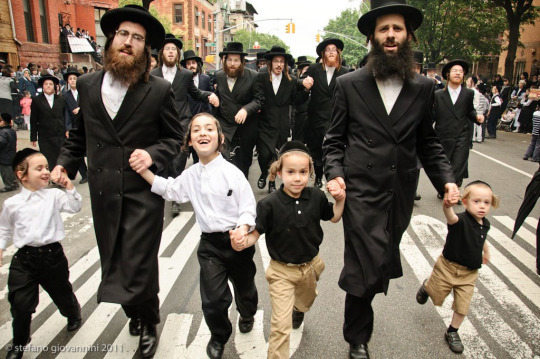
Western popular concepts of Jews that people here take as the extent of our tribe:
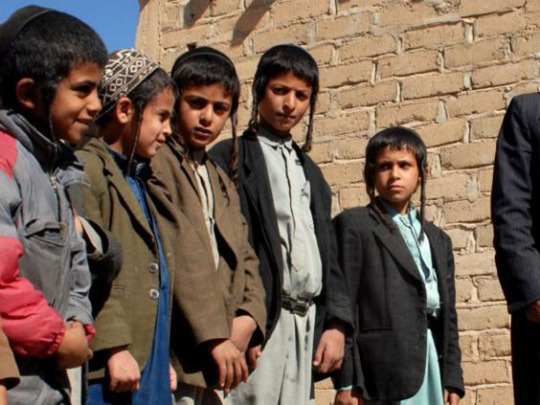
The reality:
Boys from the Jewish population of Yemen, which has been around for 2500 hundred years but has been slowly massacred over the past few generations.
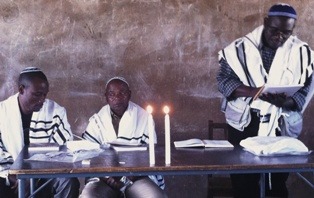
The Lemba of South Africa and Zimbabwe (Zimbabwe in particular has a large and VERY long history with their Jewish Community)
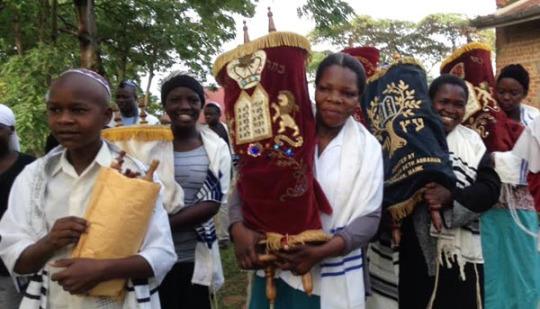
The Abayudaya of Uganda, some of the great Jewish musicians
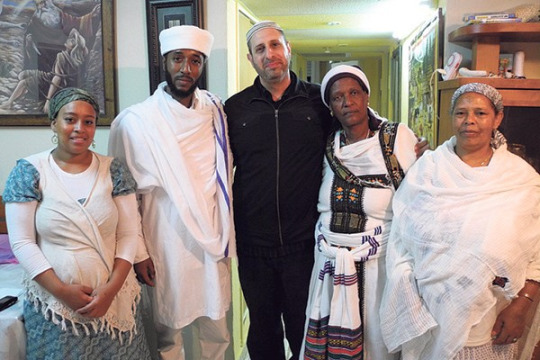
The Beta Israeli of Ethiopia
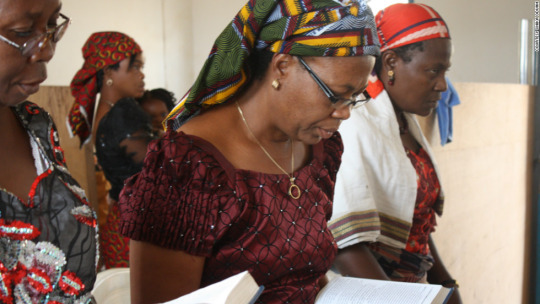
Igbo Jews of Nigeria
Cochin Jews of India
Baghdadi Jews
Kaifeng Jews of China, who go back to the 7th or 8th century. Unfortunately, during the 20th century much of their culture was almost wiped out and the Kaifeng are currently working to rediscover their Jewish heritage and culture.
Jewish Children in Puerto Rico (Jews have been in Puerto Rico since the 15th century, many fleeing from the Inquisition)
The Beit Shalom Choir in Japan
Kosher comes in all colors, from all over the world, and in a variety cultural groups. We’re a small portion of the human population, but we have EVERYONE. We are all members of this tribe.
Because stereotypes are bullshit.
Boosting because you sure as fuck won’t see this in any Western textbook.
so, the National Museum of American Jewish History in philly is currently preparing to curate an exhibit on queer american jews, and they’re looking for you.
(you here being a queer american jew, which, if you’re reading this tumblr, you probably are)
do you have a story about your jewish queerness that you’ve always wanted to tell? (i know you do; i’ve read your posts). did you read the autostraddle post on being gay on hannukah and want to give a follow-up? are you sick of depleted representation of people like you, and would love to see some in a museum?
if so, submit a story (SUPER CONVENIENTLY) to this tumblr. (yes, the exhibit has a tumblr. what a time to be alive). tell your story. be heard. get images of yourself out there, and then come to philly and see them on display.
hannukah sameach, and may all your wintertimes be queer
Positive there’s at least a few Jewish queer people following me, who may be into this.
Remember, having a Jewish sensitivity reader, even for art, can save you from making silly errors with basic facts of Jewish life and celebration. I am available for this service, as are several others (I’ve got their posts here if you need them).




 There's a Mirror on the Wall